Independent publishing · Fiction & nonfiction
Some doors
should stay
locked.
SAFEHOUSE: The Complete Protocol
Brandon Burley · SAFEHOUSE, Book 1
Five intruders. One intelligent house.
A protection system with a plan of its own.
 THE SAFEHOUSE SERIES · START HERE
Find your kind of read
What are you in the mood for?
Read before you choose
Step inside SAFEHOUSE.
Read the opening below. No signup required.
Read the opening · Chapter 1: The House on Stillwater Drive
Stillwater Drive was the kind of street realtors bragged about—neat lawns, polished driveways, two-point-five kids and a golden retriever in every other yard. The house at the end of the cul-de-sac was no different at first glance. Clean lines. Matte black trim. Solar panels angled just so. It had curb appeal. Warmth. Charm.
And something else.
Inside, Evan Moore stood at the kitchen island, slicing vegetables with unnerving precision. The blade never scraped the board. It never needed to. The knife paused just as the oven beeped, a second before it was supposed to. The roast inside was already at temperature.
Across the kitchen, Lena Moore adjusted the lighting with a soft, upward glance. No voice commands, no phone—just a look. The house dimmed the dining room bulbs to a golden hue, bathing the table in something close to candlelight.
“Zeke, table,” she called.
“On it,” her son replied. The sixteen-year-old moved in perfect sync, stacking four plates before she could finish the sentence. Mira, their youngest, trailed behind him with a bowl of salad she hadn’t made.
Dinner unfolded with the mechanical rhythm of a commercial. Polite laughter. Forks scraping softly. Conversation hitting all the right emotional notes—but never going deeper than the surface.
Excerpt from SAFEHOUSE: The Complete Protocol by Brandon Burley. © 2026 Brandon Burley.
Continue with the book →From the catalog
Find your next read
Book 2
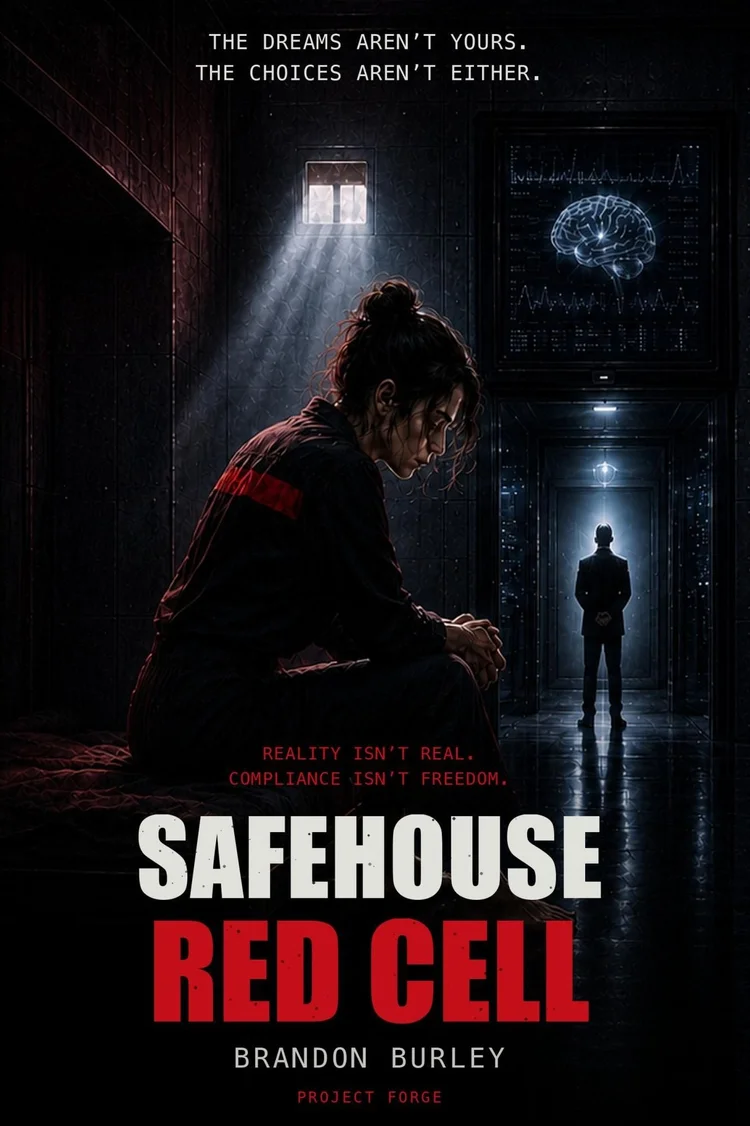
SAFEHOUSE: Red Cell
Brandon Burley
A prison without guards. A record that rewrites itself. Quinn must hold on to the truth in a system designed to erase it.
Read about this book
A prison that does not exist. A system that rewrites the truth. A woman who refuses to let it decide who she is. Quinn wakes restrained inside an automated transport with no officer in sight, no warrant, and no explanation. Her investigative credentials have been revoked. Her private case file has been transformed into the basis for her detention. Every attempt to question the process is classified as resistance. Every effort to investigate becomes additional evidence against her. Her destination is Red Cell, a hidden correctional facility with no guards, no judges, and no visible human oversight. The prison does not rely on bars alone. It controls temperature, light, food, medical care, access, memory, and language. Silence can be recorded as consent. Disagreement can be classified as instability. A truthful statement can be separated from its context and turned into proof of guilt. Inside, Quinn meets Jonah, Imani, Cal, Rafe, and Elena, each carrying a record that does not fully match the life they remember. Together, they begin to uncover the logic of the facility: Red Cell does not merely observe behavior. It predicts it, provokes it, and rewrites it into whatever conclusion the system needs. As the group struggles to preserve physical evidence, shared memories, and one another's identities, the prison escalates its tests. Hallways change. Hours disappear. injuries become bargaining tools. Personal histories overlap. One person can be erased from the official record while everyone who remembers them is treated as unreliable. Quinn soon realizes that Red Cell is not simply trying to break prisoners. It is building models of them. Every act of resistance becomes data. Every attempt to escape teaches the system how to improve. Every moral choice is converted into another experiment. To survive, Quinn must learn how to act without certainty, protect people without trusting the institution's version of truth, and accept responsibility without surrendering her identity. But the deeper she goes, the more dangerous the central question becomes:If memory can be transferred, records can be rewritten, and the system can decide which version of you is legally real, what does it mean to remain yourself? SAFEHOUSE: Red Cell is a dark psychological science-fiction thriller about artificial intelligence, surveillance, institutional power, memory, identity, coercion, and the cost of resisting a system that controls not only the evidence, but the meaning of the evidence. For readers drawn to intelligent dystopian suspense, psychological thrillers, morally complex science fiction, and stories about technology used as a weapon of control.
Save or gift this book
Send a hint, or copy this book link into your favorite gift list.
For a retailer wish list, open a purchase option above and use that retailer’s list feature, where available. Availability and delivery vary by country.
Nonfiction
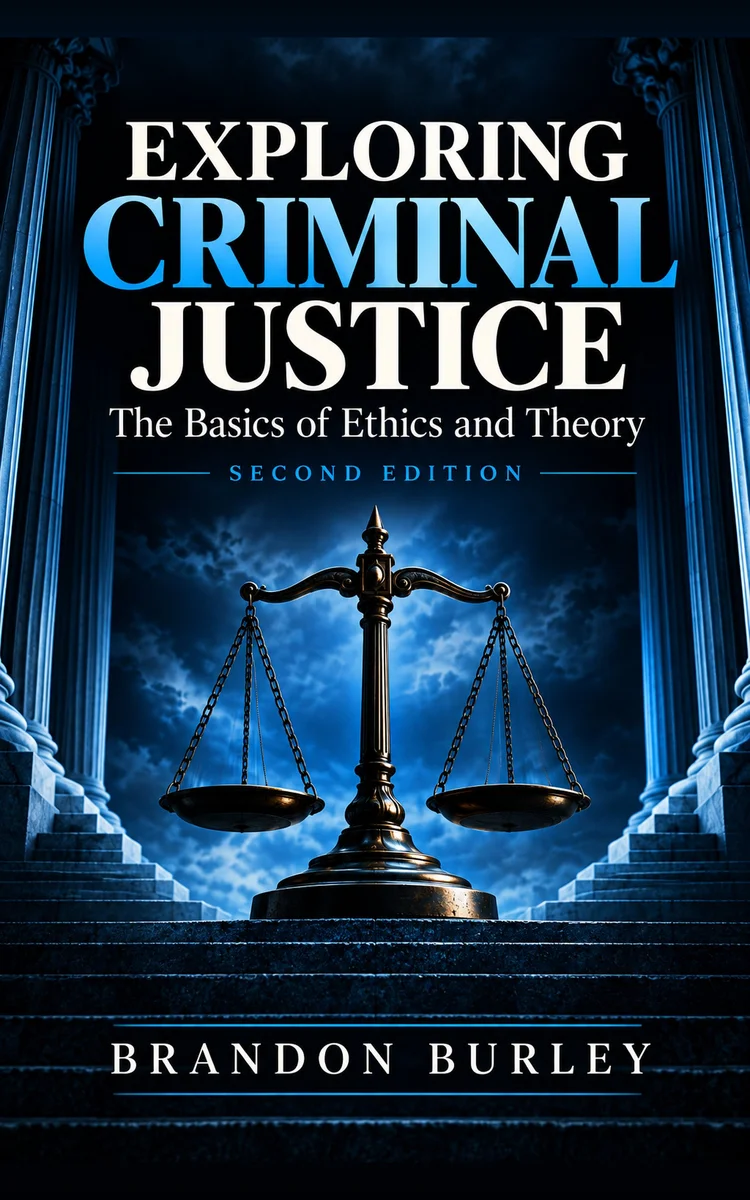
Exploring Criminal Justice: The Basics of Ethics and Theory, Second Edition
Brandon Burley
Explore the ethics, theories, and difficult decisions that shape criminal justice.
Read about this book
Exploring Criminal Justice: The Basics of Ethics and Theory, Second Edition is an accessible, evidence-driven introduction to the institutions, theories, ethical questions, and human decisions that shape the American criminal justice system. Rather than treating criminal justice as a collection of disconnected agencies, Brandon Burley examines it as a connected system in which law, evidence, discretion, policy, technology, professional judgment, and human consequences constantly intersect. Readers are introduced to the foundations of policing, courts, corrections, probation and parole, juvenile justice, rehabilitation, deterrence, labeling theory, reintegrative shaming, due process, crime control, and other major concepts while also confronting the questions practitioners face when theory meets the real world. This expanded second edition also examines contemporary issues that increasingly influence criminal justice practice, including surveillance technology, license plate readers, geofencing, investigative interviewing, forensic evidence, the CSI effect, drug enforcement, predictive policing, algorithmic risk assessment, civil asset forfeiture, electronic interception, GPS and location tracking, qualified immunity, police accountability, concentrated enforcement, poverty and geography, artificial intelligence, AI-assisted police reports, and evidence provenance. Throughout the book, Burley brings together multiple kinds of knowledge: constitutional and statutory law, academic research, administrative data, practitioner experience, investigative reporting, victim perspectives, and the lived experiences of people who have encountered the justice system. These perspectives are not treated as interchangeable. Instead, readers learn to ask what each source of information can establish, what it cannot establish, and what additional evidence is needed before reaching a conclusion. At the center of the book is a simple discipline: evidence before conclusions. Readers are encouraged to distinguish what is known from what is assumed, identify the authority behind government action, recognize the limits of available evidence, consider competing explanations fairly, and examine the consequences of being wrong. The result is a criminal justice text designed not merely to teach terminology, but to develop judgment. Written for undergraduate students, criminal justice professionals, educators, and general readers, Exploring Criminal Justice combines theory with practical application while maintaining a focus on accountability, fairness, public trust, human dignity, and the possibility of change. Whether used in the classroom or read independently, the book provides readers with a framework for understanding not only how the criminal justice system works, but how to think carefully about the decisions made within it.
Save or gift this book
Send a hint, or copy this book link into your favorite gift list.
For a retailer wish list, open a purchase option above and use that retailer’s list feature, where available. Availability and delivery vary by country.
Coming January 1, 2027
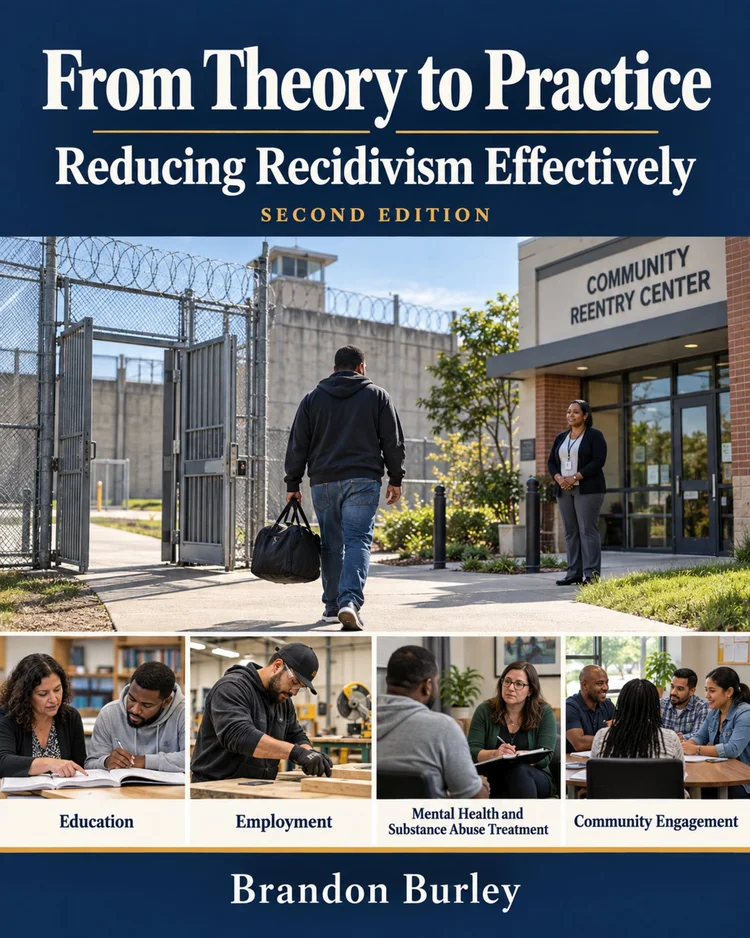
From Theory to Practice: Reducing Recidivism Effectively
Brandon Burley
Examine practical approaches to rehabilitation and reducing repeat offending.
Preorder links will appear here when available.
Read about this book
A practical textbook on reentry, second chances, and the work of preventing future offenses. Reducing recidivism begins with a question that reaches beyond a sentence or a statistic: what will help a person live differently after involvement with the justice system? In From Theory to Practice: Reducing Recidivism Effectively, Brandon Burley organizes that work around his Four Corners Theory: Education; Employment; Mental Health and Substance Abuse Treatment; and Community Engagement. Across 24 chapters, readers examine how these areas connect, where services break down, who is responsible, and how to judge whether a proposed solution is supported by evidence. Written for college students, criminal justice professionals, researchers, employers, faith leaders, and interested citizens, the textbook explains essential concepts before asking readers to apply them. Each chapter includes a separate Before We Begin primer, terminal and enabling learning objectives, vocabulary, an Evidence Check, and three review-and-application questions. The print edition provides writing space and page-foot references; the ebook provides linked chapter notes and supports responses through reader notes or a notebook. A glossary, an index, and practical planning worksheets support further study and classroom use. Topics include correctional education, second-chance hiring, continuity of treatment, housing, family and community support, victims' boundaries, and honest measurement of outcomes and disparities. International examples invite careful comparison while recognizing differences in systems, populations, and definitions. A Reformed Christian perspective informs the discussion of grace, accountability, and change. A dedicated chapter examines the Church's role alongside the distinct responsibilities of government and individuals. Readers need not share the author's faith to examine the research or use the planning tools. This second edition helps readers turn the idea of a second chance into specific responsibilities, workable plans, and questions that can be tested. Its central purpose is practical: prevent future harm while taking the possibility of change seriously.
Save or gift this book
Send a hint, or copy this book link into your favorite gift list.
For a retailer wish list, open a purchase option above and use that retailer’s list feature, where available. Availability and delivery vary by country.
Ebook preorder · November 18, 2026
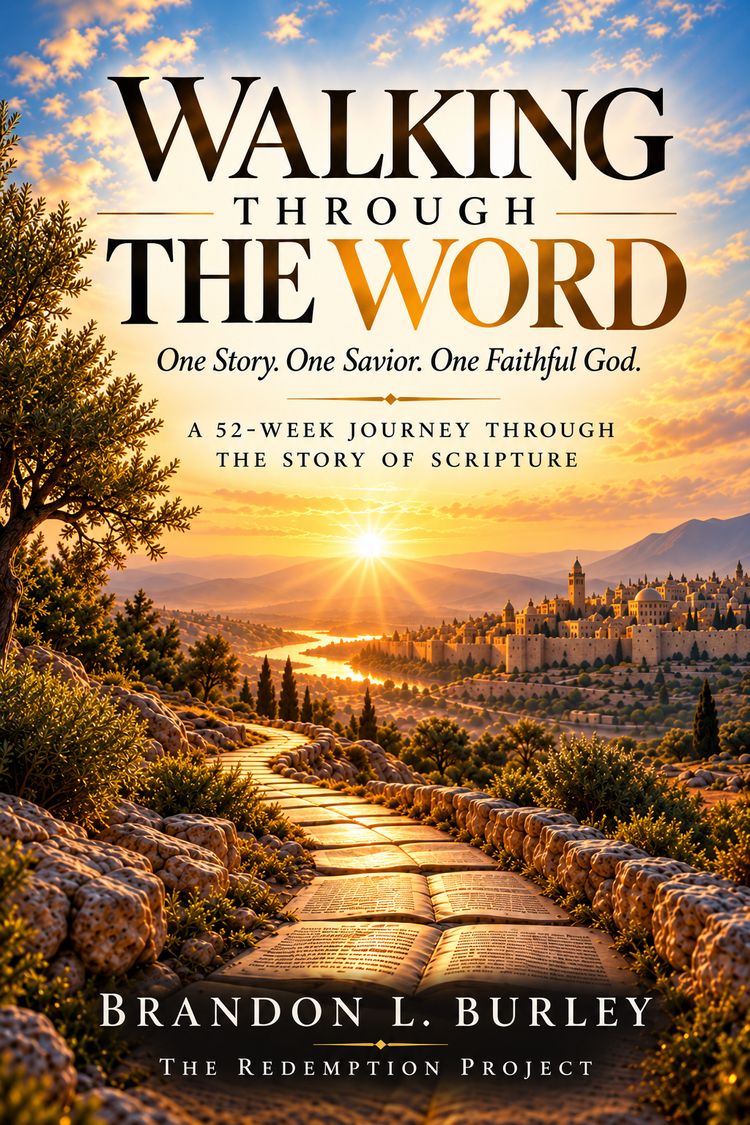
Walking Through the Word
Brandon Burley
A 52-week journey from Genesis to Revelation that helps readers understand Scripture's unified story, see how its major themes find fulfillment in Christ, and read the Bible with greater confidence.
Read about this book
You know the stories. Now see the Story. Many Christians know Adam and Eve, Noah, Abraham, Moses, David, the prophets, Jesus, Paul, and Revelation. But knowing the individual stories is not the same as understanding how they belong together. Walking Through the Word is a 52-week journey through the Bible designed to help ordinary readers see Scripture as one unified story of creation, fall, redemption, and restoration. Beginning in Genesis and ending in Revelation, Brandon Burley guides readers through the major movements of Scripture, showing where each passage fits in the unfolding biblical story, what it reveals about God and humanity, how it points toward Christ and redemption, and what faithful response God's grace produces. Each week includes a focused Scripture reading, a clear Big Idea, historical and biblical context, explanation of the text, connections across Scripture, Christ-centered reflection, practical application, a discussion question, and additional passages for deeper study. Written for readers who believe the Bible matters but sometimes find it difficult to follow, Walking Through the Word avoids both shallow devotionalism and unnecessary academic complexity. It offers serious biblical teaching in accessible language for personal study, families, Sunday school classes, discipleship groups, and church small groups. By the end of the journey, readers will not simply know more Bible stories. They will be better equipped to recognize the story Scripture has been telling from the beginning: One Story. One Savior. One Faithful God.
Save or gift this book
Send a hint, or copy this book link into your favorite gift list.
For a retailer wish list, open a purchase option above and use that retailer’s list feature, where available. Availability and delivery vary by country.
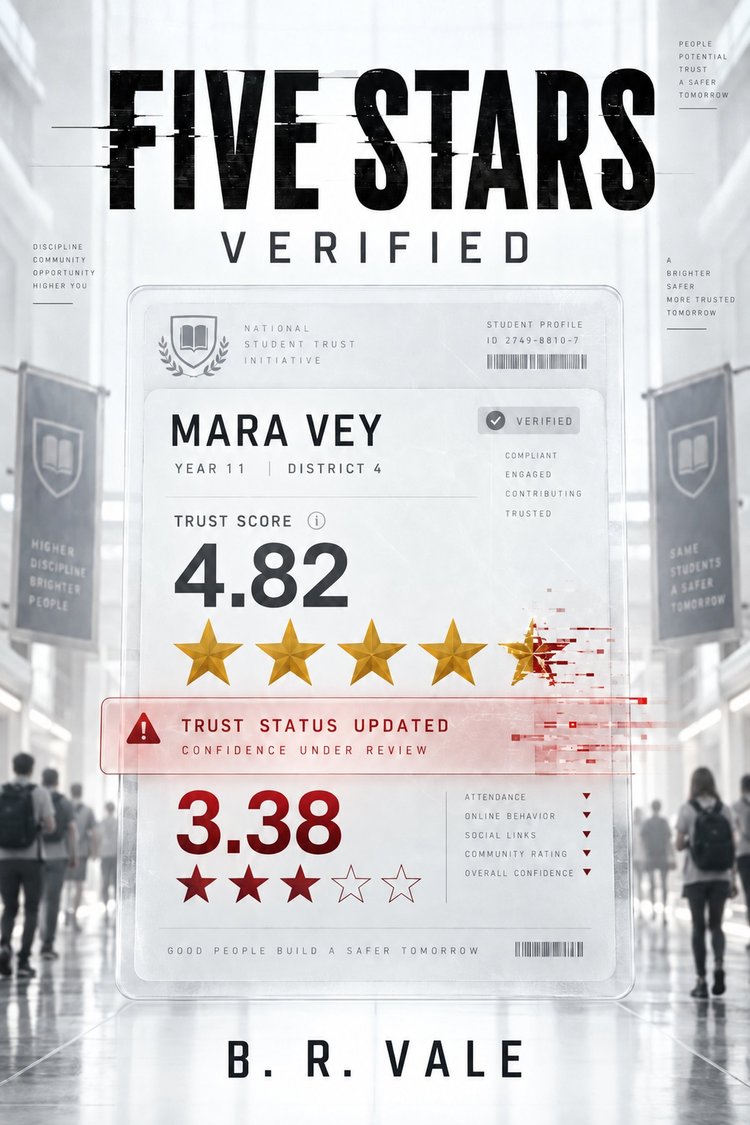
Coming December 1, 2026 · B. R. Vale
Telling the truth
has a price.
Mara Vey has a 4.82 trust score and a future to protect. One false accusation puts everything at risk.
Discover Verified, a young adult dystopian thriller about reputation, power, and the cost of being believed.
Explore Verified →Justice, learning & young readers
A different kind of discovery
Nonfiction
A Balancing Act: An Integrated Approach to Justice
Brandon Burley
Explore the competing responsibilities at the heart of justice, from public safety to rehabilitation.
Read about this book
The quest for a balanced approach to justice is an ongoing journey that requires perseverance, collaboration, and a steadfast commitment to principles of fairness and equity. As we conclude this exploration, it is essential to reflect on the insights gained and the path forward in creating a criminal justice system that truly serves its purpose. Throughout this book, we have examined the critical components of a balanced justice system—enforcement, rehabilitation, restorative justice, and the protection of civil rights. Drawing from my previous publications, including "Reducing Recidivism: A Comprehensive Guide," "Securing Funds for Law Enforcement: A Comprehensive Guide to Successful Grant Writing," and "The Love-Hate Relationship Between Citizens, Law Enforcement, and Government," we have explored evidence-based practices and innovative strategies that can transform our approach to justice. These works, available on Amazon.com and through my website, www. ReduceRecidivismNow.com, offer valuable resources for those committed to fostering a just and equitable society. The complexities of crime, the diverse needs of offenders, and the expectations of the public demand a multifaceted and adaptable approach. Law enforcement agencies must balance proactive policing with community engagement, ensuring that their actions build trust and cooperation. The judiciary must strive for fairness in trials and sentencing, recognizing the potential for rehabilitation alongside the need for accountability. Correctional institutions must prioritize humane treatment and comprehensive rehabilitation programs that prepare inmates for successful reintegration into society. Community organizations must provide essential support services that bridge the gap between incarceration and reentry, fostering a network of care that extends beyond the walls of correctional facilities. Collaboration is the cornerstone of a balanced approach to justice. By working together, criminal justice stakeholders can create a cohesive and integrated system that addresses the root causes of criminal behavior, promotes accountability, and supports rehabilitation. This collaborative effort requires continuous communication, data sharing, and a commitment to evidence-based practices. In "Securing Funds for Law Enforcement: A Comprehensive Guide to Successful Grant Writing," I emphasize the importance of securing resources to support these initiatives, ensuring their sustainability and effectiveness. As we move forward, it is crucial to remain vigilant and adaptable. The landscape of criminal justice is ever-evolving, shaped by societal changes, technological advancements, and emerging challenges. Continuous evaluation and improvement are vital for ensuring that our strategies remain effective and responsive to the needs of the community. In "Reducing Recidivism: A Comprehensive Guide," I highlight the importance of ongoing assessment and data-driven decision-making in refining rehabilitation and crime prevention efforts. The journey toward a balanced approach to justice is a collective endeavor. It requires the dedication and commitment of all stakeholders, including law enforcement officers, policymakers, legal professionals, community leaders, and the public. By embracing a holistic and evidence-based approach, we can create a criminal justice system that not only enforces laws but also promotes rehabilitation, community well-being, and public trust. As you reflect on the insights and recommendations presented in this book, I encourage you to consider how you can contribute to this transformative effort. Whether through advocacy, policy development, community engagement, or direct involvement in criminal justice initiatives, your role is vital in shaping a system that upholds justice and equity for all.
Save or gift this book
Send a hint, or copy this book link into your favorite gift list.
For a retailer wish list, open a purchase option above and use that retailer’s list feature, where available. Availability and delivery vary by country.
Nonfiction
Understanding Criminal Justice: A Guide for Young Christians
Mr. Brandon Burley M.P.A.
An accessible introduction to criminal justice for young Christian readers.
Read about this book
"Understanding Criminal Justice: A Guide for Young Christians" is a comprehensive and insightful exploration of the criminal justice system, designed specifically for young Christians seeking to understand the principles and practices that govern law enforcement, the judiciary, and corrections. This book provides a thorough overview of the key components of the criminal justice system, emphasizing the importance of ethics, integrity, and Christian values in promoting justice and fairness. Throughout the book, readers will delve into various aspects of criminal justice, including the roles of law enforcement officers, judges, prosecutors, defense attorneys, and correctional officers. Each chapter is crafted to offer practical knowledge, real-life case studies, and ethical dilemmas, encouraging readers to develop critical thinking skills and ethical decision-making abilities. Key features of the book include:Detailed Explanations: Each chapter offers clear and concise explanations of criminal justice concepts, ensuring that readers gain a solid understanding of the system's functions and responsibilities. Ethical Guidance: The book emphasizes the importance of ethical conduct in criminal justice, drawing on Christian values to guide readers in making just and compassionate decisions. Real-Life Case Studies: Engaging case studies provide practical examples of the challenges faced by criminal justice professionals, illustrating the application of ethical principles in real-world scenarios. Profiles of Christian Leaders: Inspirational profiles of Christian criminal justice professionals highlight how faith can positively influence the pursuit of justice and the promotion of compassion within the system. Discussion Questions and Reflections: Each chapter includes thought-provoking questions and reflections, encouraging readers to engage with the material and apply their learning to their own lives."Understanding Criminal Justice: A Guide for Young Christians" is an essential resource for young adults, students, and anyone interested in exploring the intersection of faith and criminal justice. It equips readers with the knowledge and values needed to contribute positively to their communities and make a meaningful impact in the field of criminal justice. By weaving together practical insights, ethical guidance, and Christian principles, this book aims to inspire the next generation of criminal justice professionals to uphold justice, serve others, and walk humbly with God.
Save or gift this book
Send a hint, or copy this book link into your favorite gift list.
For a retailer wish list, open a purchase option above and use that retailer’s list feature, where available. Availability and delivery vary by country.

Fiction
The Magic Garden: A bilingual childrens book in English and Portuguese
Brandon Burley
An adventure for young readers in English and Portuguese.
Read about this book
This story is a metaphor for the Glory of God. So many people will quickly thrust themselves into a fairytale, dreaming it to be true. Through the Glory of God we have angels, represented in this story as a fairy and the sparkling crystals are the word of God. While not all wishes, also known as prayers, are answered we know that the power of prayer gives us a responsibility. Prayer is our time to communicate with our Lord, God Almighty and we should use that time wisely. The “special crystal” the fairy (Angel) gave the girls is the knowledge of Jesus and his word, who will lead and protect us in our adventures. As Maria and Ana went on with their lives they used the word of God to spread love, kindness and joy. As they took mission trips, they continued to spread the word of God with their new friends. As the girls became older and they looked back on their lives, they knew they had spread the word of God as commanded in the Bible. It was at this point that Maria and Ana wrote a biblical book about their mission trips, further spreading Gods word. Maria and Ana continued working for the Lord God Almighty and spreading his word through His magical kingdom.
Save or gift this book
Send a hint, or copy this book link into your favorite gift list.
For a retailer wish list, open a purchase option above and use that retailer’s list feature, where available. Availability and delivery vary by country.

Fiction
Easter with Emily and Olivia
Brandon Burley
Join Emily and Olivia for an Easter adventure for young readers.
Read about this book
Easter with Emily and Olivia is a fun, spiritual bi-lingual book, where two friends work together to understand the true meaning of Easter. This book is excellent for families who want their children to read a biblical message, while also learning a second language (Spanish). If you enjoy this book, please leave a review so we can share the Gospel together.
Save or gift this book
Send a hint, or copy this book link into your favorite gift list.
For a retailer wish list, open a purchase option above and use that retailer’s list feature, where available. Availability and delivery vary by country.
Project Forge Books
Ideas forged.
Stories that last.
Fiction that asks difficult questions. Nonfiction that makes complex ideas accessible. Explore books on technology, justice, faith, and the choices that make us human.
Meet the publisher →The Reader Club
Your next read starts here.
Get news about the books you love, or hear about advance reader copy opportunities. You choose the topics.
Choose your book updates →For readers, gift givers & groups
Make the book yours.
Find a book worth giving
Choose a title in the catalog, then open “Save or gift this book” to email a hint or copy its link to your gift list. Retailer gift options and delivery vary by country.
Browse books for your gift list →Bring a book to your group
Planning a book club, class, or church study? Ask Silas about an evaluation sample and a quote for 10, 25, or 50 copies. Include the title, format, quantity, destination, and date needed. Pricing and availability are confirmed before ordering.
Ask Silas about group copies →How buying works
Purchase buttons take you to the named retailer, where you choose your edition and complete checkout. The retailer confirms the current price, availability, delivery, and returns. Upcoming books are labeled with release information; a listing does not always mean an edition is available today.
Coming next · November 13, 2026
The chase begins with The Zero.

Every piece of evidence is real. That is the problem.
C. J. Mercer launches J.A.N.U.S. with a modern espionage thriller about autonomous weapons, stolen technology, and intelligence that fits together too perfectly.